

Kahlil Gibran: The Poet Who Spoke to the World
Hidden Voices began as a collaboration with the Museum of the City of New York that was initiated to help City students learn about the countless individuals who are often “hidden” from traditional historical records. Each of the people highlighted in this series has made a positive impact on their communities while serving as outstanding examples of leadership, advocacy, and community service.
Today, in celebration of Arab American Heritage Month, we’re sharing the story of Kahlil Gibran, a writer, artist, and philosopher whose words have crossed borders, languages, and generations.
In 1923, a small collection of 26 poetic essays called The Prophet was published for the first time. Featuring poignant reflections on love, friendship, work, freedom, and more, it would go on to become one of the most widely translated and best-selling books in the world. Many people even think of it as one of the earliest self-help books.
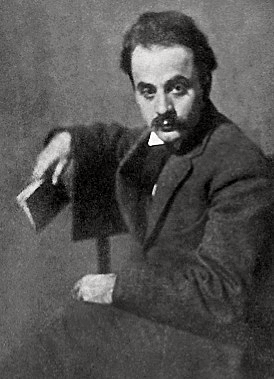
Even though The Prophet became incredibly popular, its author, Kahlil Gibran (1883–1931), wasn’t fully appreciated by literary critics during his lifetime. Despite this, his unique voice—shaped by his experiences as an immigrant writer in New York City—still inspires millions of readers to this day.
Gibran was born in 1883 in a small mountain town in Lebanon, which was then part of Ottoman Syria. There, he developed an appreciation for the region's natural beauty and stunning landscapes. He also took an early interest in the art of Leonardo da Vinci. However, he also faced an unstable family life, due to his father's violent nature.
When Gibran was 12 years old, his mother made the brave decision to move the family away from her husband to the United States. They became part of a wave of more than 60,000 Arabic-speaking immigrants to America around this time. When they first settled in Boston, they arrived with very little and faced the challenges of learning a new language and adjusting to a new culture. Gibran entered school without knowing English, but he learned quickly and began discovering his voice in a new country.
As he grew older, Gibran showed talent not only for writing but also for drawing and painting. He studied art in Boston and later traveled to Paris with the support of his friend and patron Mary Haskell, where he encountered new European artistic movements.
During this period, Gibran also faced deep personal loss. In 1902, he returned to the United States after learning that his sister had died. Within a year, both his brother and mother also passed away. These tragedies shaped his understanding of grief, love, and resilience.
These early experiences with loss, migration, and exposure to new cultures strongly influenced both his future artwork and his writing.
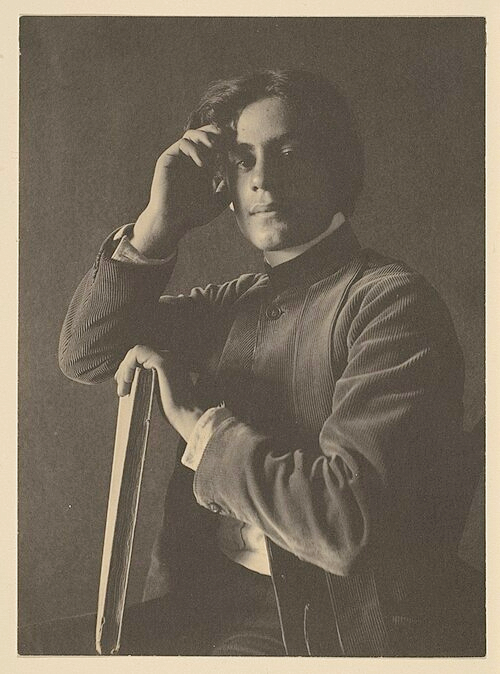
By 1911, at age 28, Gibran moved from Boston to New York City with Haskell’s help. At that time, Lower Manhattan was home to a neighborhood known as Little Syria, the center of the emerging Arab American press. Newspapers and magazines there provided a platform for the growing Arab American population to share their views, and Gibran quickly became part of this intellectual and cultural world.
He lent his own voice to political causes of the day, writing for both English- and Arabic-language publications. He advocated for Syrian independence from the Ottoman Empire and relief for Lebanese famine victims and refugees during World War I. As a civic leader in his community, he spoke out against injustice and encouraged cultural pride and national self-determination.
Gibran also became part of New York’s vibrant artistic community, publishing many of his most recognized works there. He helped form the Pen League, also known as the Pen Bond, one of the first Arab American literary groups. Its members shared a desire to blend Eastern traditions with new ideas from Western literature. Their writing often explored the feelings of homesickness, hope, and belonging that are characteristic of the immigrant experience, and they helped make Arab literature more accessible to everyday readers.
Though many of his Pen League contemporaries wrote primarily in Arabic, Gibran also published works in English, allowing his words to reach audiences across continents. His Arabic works broke away from older, formal styles, and used clearer and more emotional language. His English writings introduced American readers to a poetic voice that was at once simple and deeply philosophical.
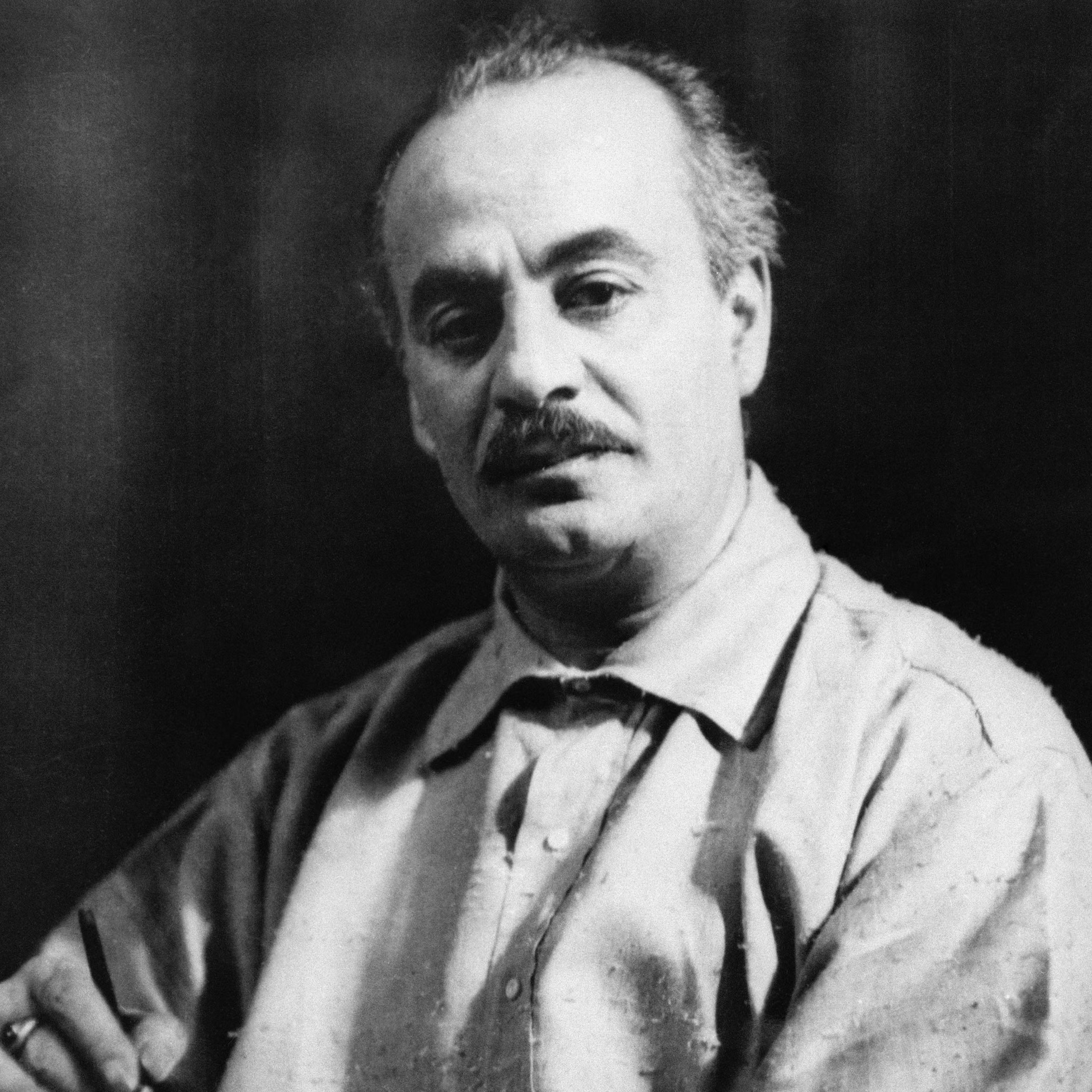
He spent more than ten years working on The Prophet, his third and most popular English work, in his Greenwich Village apartment. The book tells the story of Almustafa, a wise man preparing to leave a city where he has lived in exile for twelve years. Before he departs, the townspeople ask him to share his thoughts on life’s greatest questions. Gibran also illustrated the book with his own artwork.
Readers across generations have found comfort in The Prophet’s messages. Whether someone is celebrating a joyful moment or navigating a difficult time, the wisdom Almustafa shares with his fellow villagers is often quoted at important life events. “Love gives naught but itself and takes naught but from itself,” you may hear at a wedding; “Love possesses not, nor would it be possessed; for love is sufficient unto love.”
Although his writing is often described as spiritual, it does not belong to any one religion. Instead, Gibran drew from many traditions—Christianity, Islam, and various other Eastern and Western philosophies—to explore the values that connect people everywhere.
Gibran’s ability to speak to universal experiences is one of the reasons that The Prophet has never gone out of print. During World War I, a pocket-sized Armed Services Edition was distributed to soldiers, and during the countercultural movement of the 1960s, the book reached its peak of popularity in the United States, selling over 5,000 copies a week.
Though he was well known even in his time, and has always been widely appreciated in Arab culture, Gibran’s place in American literary history has been more complicated. Many literary critics of his era dismissed his work as too sentimental. Today, however, scholars are reexamining this view as they shine a brighter light on immigrant voices and cross-cultural storytelling.
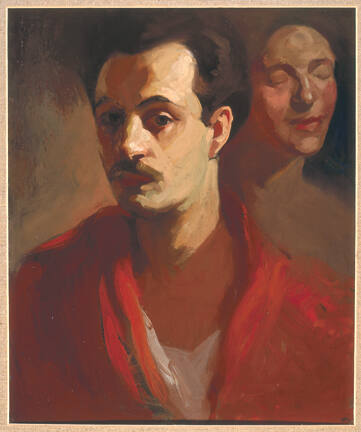
Gibran passed away in 1931 at the age of 48, but his legacy continues to grow. Across 14 books and many other writings and artworks, he showed the power of storytelling to build bridges between cultures, languages, and generations. His core message in The Prophet has stood the test of time: a reminder of the strength of the human spirit, that we are “far greater than we know—and all is well.”
Sources
- Acocella, J. (2024). How The Prophet Made Kahlil Gibran a Household Name in America. In The Bloodied Nightgown and Other Essays. Literary Hub. https://lithub.com/how-the-prophet-made-kahlil-gibran-a-household-name-in-america/ (Original work published Farrar, Straus and Giroux)
- Amirani, S., & Hegarty, S. (2012, May 8). Kahlil Gibran’s The Prophet: Why is it so loved? BBC News. https://www.bbc.com/news/magazine-17997163
- Biography.com Editors. (2021, November 17). Kahlil Gibran Biography. A&E; Television Networks. Biography. https://www.biography.com/writer/khalil-gibran
- Day, F. H. (1896). Kahlil Gibran with Book [Platinum print]. https://www.metmuseum.org/art/collection/search/267777
- Fine, T. (2017, June 15). Kahlil Gibran’s Community in New York: A Special Photograph Analyzed by Robert Goodhouse. HuffPost. https://www.huffpost.com/entry/kahlil-gibrans-community-in-new-york-a-special-photograph_b_59428940e4b03e17eee08983
- Gibran, K. (1911). Self-portrait [Oil on Masonite]. https://collections.telfair.org/objects/5022/selfportrait
- Gibran, K. (1923). The Prophet. Alfred A. Knopf.
- Ivry, S. (2023, September 27). Kahlil Gibran: Godfather of the “New Age.” JSTOR Daily. https://daily.jstor.org/kahlil-gibran-godfather-of-the-new-age/
- Kates, A. (2019, September 3). Kahlil Gibran: An Immigrant Artist on 10th Street - Village Preservation. Off the Grid. https://www.villagepreservation.org/2019/09/03/khalil-gibran-an-immigrant-artist-on-10th-street/
- Nasib Aridah Organization. (2004). Images from the pages of al-Funun. Nasib Aridah Organization. Al-Funun. http://www.al-funun.org/al-funun/images/gibran.html
- New York City Department of Education Social Studies Department, & Museum of the City of New York. (2019). Hidden Voices: Untold Stories of New York City History. New York City Department of Education. https://www.weteachnyc.org/resources/resource/hidden-voices-lgbtq/
- Schinsky, R., & O’Neal, J. (Hosts). (2019, April 9). How Khalil Gibran’s The Prophet Became a Quiet Cultural Powerhouse (No. 23) [Broadcast]. Book Riot. https://bookriot.com/khalil-gibrans-the-prophet/
- The Poetry Foundation. Kahlil Gibran. The Poetry Foundation. Retrieved from https://www.poetryfoundation.org/poets/kahlil-gibran
Banner collage features photograph of Kahlil Gibran; illustration by Kahlil Gibran; The Blessed Mountain; and Kahlil Gibran's signature.